

A Ministry is not a Letter of Support: What Montenegro's public institutions can bring to Horizon Europe
In September I spent two days with public officials from Montenegro at a Horizon Europe workshop hosted by ReSPA, organised at the request of the Ministry of Energy and Mining. Much of our work came down to challenging one assumption.
When a public institution looks at Horizon Europe, it usually sees itself on the sidelines. Universities do the science, companies build the technology, and the ministry signs a letter saying the project is a good idea. That picture is wrong, and it costs good projects.
A programme Montenegro is already part of
Horizon Europe is the EU's research and innovation programme, worth EUR 93.5 billion for 2021 to 2027. Montenegro has been fully associated to it since January 2021, so its institutions take part on broadly the same terms as those from EU Member States.
The results are already visible. At the fifth EU-Montenegro Joint Committee in June 2026, the Commission reported that Montenegro had received around EUR 6 million, already more than under Horizon 2020. The country does best in the widening part of the programme and in the clusters on climate and energy and on the environment. It has just won a Teaming for Excellence grant, CENNA, on environmental monitoring and nature-based solutions for protected areas, and Podgorica has received the EU Cities Mission label.
What a ministry brings
A ministry or agency holds what a research consortium cannot buy. It has the mandate to change a rule. It owns the data a baseline is built on. It controls the places where a solution can be tested in real conditions. And it decides whether the results ever reach public policy.
The calls often say this themselves. One 2026 topic on protected areas set out its expected outcome in plain terms: managers of protected areas should be able to anticipate the future impact of the drivers of biodiversity loss and make better-informed decisions. A project like that is hard to deliver without the people who manage those sites.
Start with the problem, not the call
Many proposals begin with an open call and then go looking for a problem to fit it, and it shows on the first page. Strong projects work the other way round: a problem the institution already lives with, evidence for it, and only then a topic that matches.
There is no national envelope to draw from. A consortium normally needs at least three independent partners from three different countries, one of them in an EU Member State. Proposals are scored on excellence, impact and the quality of implementation, each out of five, and evaluators judge only what is written on the page.
Where to begin
None of this means a ministry must coordinate a large project on its first attempt. A clear partner role, with real tasks and a clear budget, is often the smarter way in.
We closed the workshop with my advice, which is the same for any public body. Pick one problem you understand better than anyone. Name the data and the site you can bring. Register your organisation, talk to Montenegro's new Horizon Europe Office and the National Contact Points, and start looking for partners now, not three weeks before a deadline.
The timing matters. The Commission has proposed EUR 175 billion for the next programme, running from 2028 to 2034. Institutions that learn to take part now will be ready when it opens.
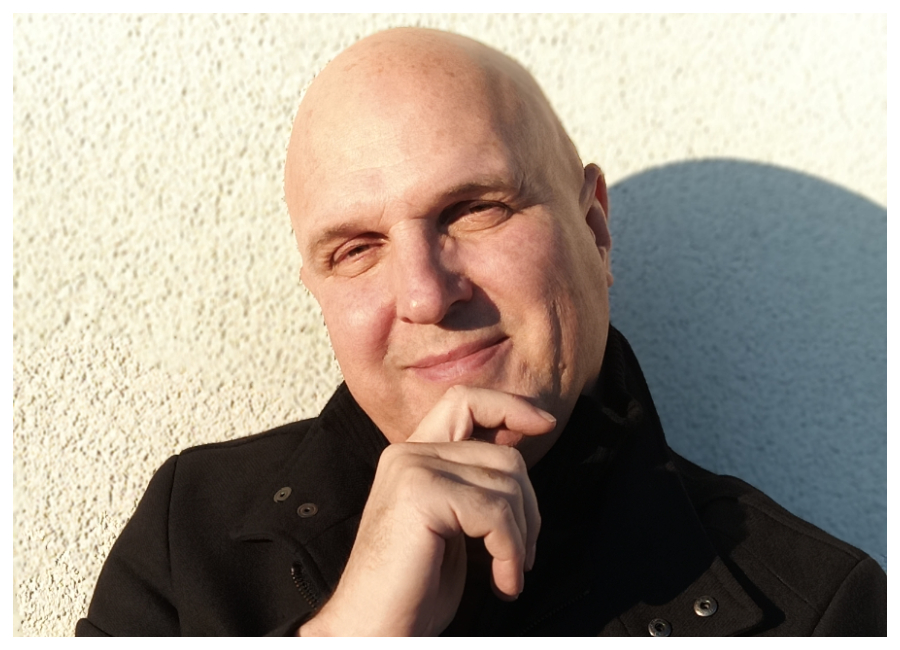
Beno Stern, MBA, is the founder and director of INFINITA, a Slovenian consultancy that helps municipalities, universities, companies and public institutions turn their development challenges into fundable EU projects.
His work rests on one idea: an organisation should not chase EU funding one call at a time, but build a system that keeps producing good projects. That thinking shaped InterventionLogic, the six-step method to take a project from its first idea to a project proposal.
Over 30 years, he has trained more than 6.000 project managers and worked on more than 30 multi-year EU co-funded projects. He co-authored two Slovenian handbooks on accessing EU funds and sits on the advisory board of the Austrian national organisation AED (Agency for Economic Cooperation and Development). In September 2026, he led the Horizon Europe Policy-to-Project Lab for Montenegrin public institutions, hosted by ReSPA.