

Bringing Digital Public Services Closer to Citizens – ReSPA at the Western Balkans Digital Summit 2026
How can digital transformation make public services not only faster, but genuinely easier for citizens to use? And how can municipalities across the Western Balkans benefit equally from innovation, regardless of their size or resources?
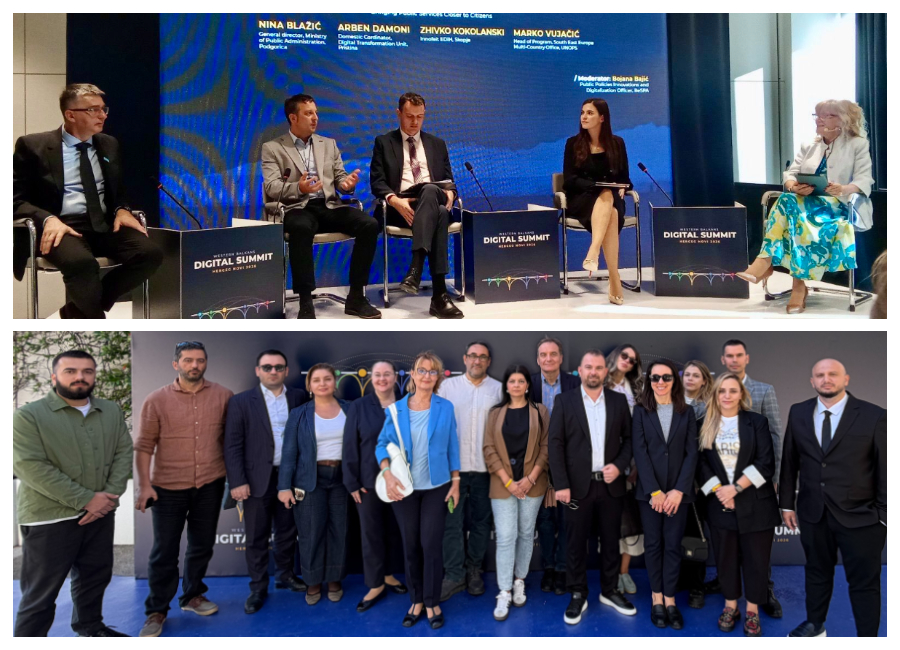
These questions were at the heart of the panel “Digital Local Government: Bringing Public Services Closer to Citizens”, held within the Western Balkans Digital Summit 2026 in Herceg Novi, Montenegro, and moderated by Bojana Bajić, ReSPA’s Digitalization and Innovations Officer.
Bringing together policymakers, practitioners, academia and international partners, the discussion focused on one of the central challenges of digital government today: moving beyond simply transferring existing administrative procedures online and towards redesigning public services around citizens’ actual needs.
The panel featured Nina Blažić, Director General of the Directorate for Local Self-Government at the Ministry of Public Administration of Montenegro; Arben Damoni, Programme Coordinator at the Digital Transformation Unit of the Ministry of Digitalisation and Public Administration; Prof. Dr. Zhivko Kokolanski, Full Professor and Vice-Dean for Finance and Industry Cooperation at the Faculty of Electrical Engineering and Information Technologies, Ss. Cyril and Methodius University in Skopje; and Marko Vujačić, Head of Programme at the UNOPS South East Europe Multi-Country Office.
Their exchange highlighted that successful digital transformation at the local level depends as much on institutional cooperation, capacities and trust as it does on technology.
Participants discussed how stronger coordination between central and local governments can help municipalities accelerate digital transformation, as well as how shared infrastructure, interoperability and reusable digital solutions can prevent successful initiatives from remaining isolated projects.
Particular attention was given to the challenges faced by smaller municipalities, which often operate with more limited financial, technical and human resources. Ensuring that these administrations are able to benefit from common platforms, expertise and regional knowledge is essential if digital transformation is to reduce, rather than deepen, existing disparities.
The conversation also explored the growing role of artificial intelligence, data-driven services and emerging technologies, alongside the contribution of digital innovation hubs and the “test-before-invest” approach, which allow public institutions to experiment with technologies and assess their value before committing significant resources.
A central message emerging from the discussion was therefore clear: digital transformation is not about moving bureaucracy online. It is about simplifying procedures, redesigning services and removing barriers between citizens and public administration.
For ReSPA, the discussion directly reflects its broader work in supporting administrations across the Western Balkans to strengthen digital transformation, innovation and citizen-centred public service delivery. By connecting administrations, experts and practitioners across the region, ReSPA helps turn successful practices into shared regional knowledge and practical solutions that can be adapted and replicated.
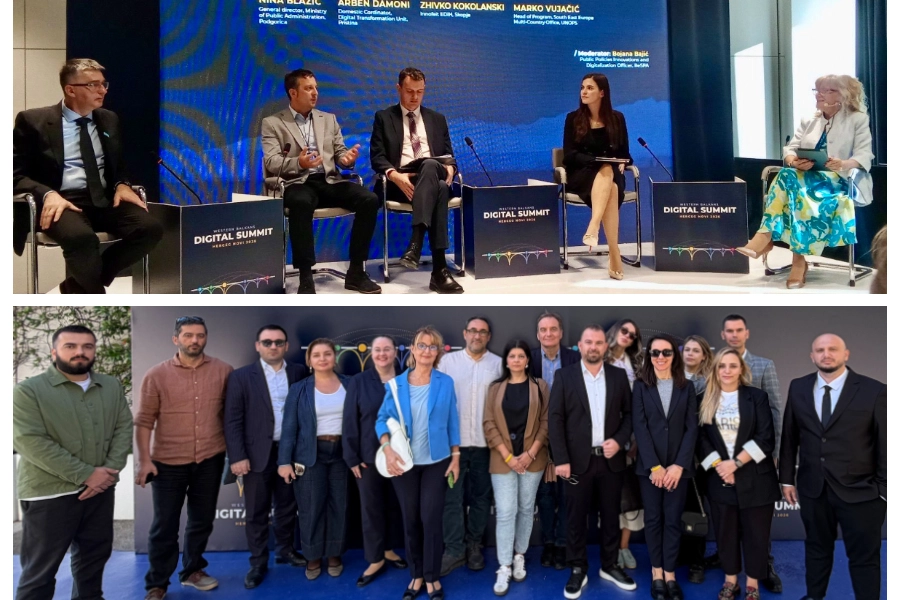
The Summit also provided an important learning platform for participants of ReSPA’s Training of Trainers on Advanced Capacity Building in Cyber Resilience and Data Protection, organised back-to-back with the event.
Through the Summit sessions, ToT participants gained a broader perspective on the links between digital transformation, emerging technologies, institutional cooperation, cybersecurity and data protection. Just as importantly, the event enabled them to exchange experiences directly with policymakers, experts and practitioners from across the Western Balkans, strengthen professional networks and explore opportunities for future cooperation.
This connection between regional policy dialogue and practical capacity building lies at the core of ReSPA’s approach: bringing together knowledge, institutions and people so that lessons discussed at regional level can translate into stronger capacities and better public services across administrations.
Concluding the panel, Bojana Bajić underlined the citizen-centred measure of successful digital government: “The success of digital government should not be measured simply by the number of services developed, but by how many citizens use them and how many barriers we remove.”
ReSPA extends its appreciation to all panellists and participants for contributing their expertise, practical experiences and perspectives to an exchange that demonstrated once again that the region’s digital transformation will be strongest when administrations learn, innovate and move forward together.