

From Regional Priorities to Fundable Projects: ReSPA Academy Turns EU Cohesion Policy into Practice
11–17 October 2026, Vodice and Šibenik area, Croatia
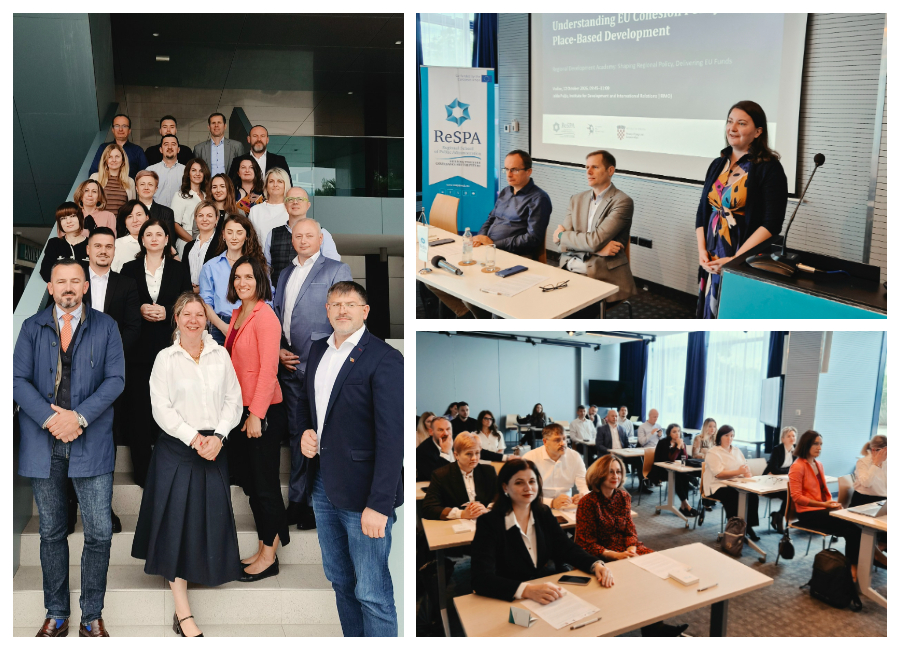
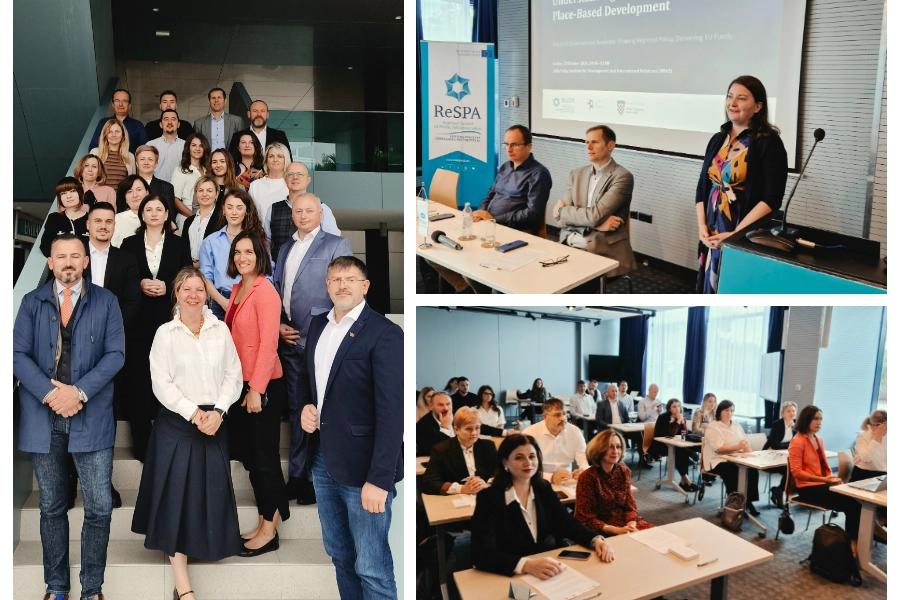
How can administrations turn regional development priorities into mature projects and EU funding into visible change for communities? This question was at the heart of the second Regional Development Academy: “Shaping Regional Policy, Delivering EU Funds,” which brought together senior public officials from the Western Balkans, Moldova and Ukraine, connecting the EU Cohesion Policy and strategic planning with the practical experience of an EU Member State and direct exposure to projects that have transformed local communities.
Designed for officials directly involved in EU integration, Chapter 22, regional and territorial development, EU funds programming and project implementation, the week-long programme combined expert sessions, practical exercises, international group work and field visits. It focused not only on understanding the rules and instruments behind EU Cohesion Policy, but also on strengthening the institutional capacities needed to translate local needs into quality development programmes and implementable projects.
The Academy was opened by Jelisaveta Tasev, Programme Manager at ReSPA, and Dubravka Smolić Vlaić, Head of Service for Knowledge Transfer at the Ministry of Foreign and European Affairs of Croatia, who highlighted the importance of cooperation and knowledge exchange between the EU Member States, the Western Balkans and Eastern Partnership administrations.
“Preparing for the effective use of EU funds requires more than understanding regulations. It requires strong institutions, mature projects and the ability to transform local needs into well-designed development priorities. By combining regional peer learning with Croatia’s practical experience, this Academy helped participants build precisely those capacities and establish connections that can support their future cooperation,” underlined Tasev.
The substantive programme was led by a strong team of Croatian and regional experts: Jakša Puljiz, Director of the Institute for Development and International Relations (IRMO) and former Deputy Minister of Regional Development and EU Funds of Croatia, and Domagoj Račić, EU funds expert and former member of Croatia’s negotiating team for Chapter 26, guided participants through the evolution and current priorities of EU Cohesion Policy, place-based development and the emerging post-2027 framework.
Particular attention was given to the proposed Multiannual Financial Framework, stronger performance orientation, the roles of national, regional and local authorities and, importantly, what the future of Cohesion Policy may mean for candidate countries preparing their institutions for eventual participation.
The programme then moved from policy to application: Croatia’s regional development framework, strategic planning, programming EU funds, multi-level governance and the design of quality development programmes. Participants worked on intervention logic, results, indicators, risk assessment and sustainability, while exploring how development strategies can be translated into realistic and fundable interventions.
Working in international groups, participants mapped stakeholders, conducted SWOT analyses, identified territorial assets and development challenges, defined development priorities and constructed intervention logic for potential projects relevant to their own communities.
Learning then moved outside the conference room. In the Šibenik-Knin County, participants explored how strategic planning, county development priorities and integrated territorial approaches can guide the effective use of EU funds.
Biljana Gulin, Director of the Development Agency of Šibenik-Knin County, presented the County’s experience with integrated territorial planning, development scenarios and intervention logic, illustrating how regional development priorities can be translated into concrete investments.
At Šibenik City Hall, Maja Čeko, Head of the Department for Economy, Entrepreneurship and Development of the City of Šibenik, presented the city’s approach to urban development and EU investment, with a particular focus on the green and digital transitions and integrated urban development.
Visits to the St. John and St. Michael fortresses added another dimension to the discussion: how investment in cultural heritage can generate sustainable tourism, economic activity and wider development benefits when supported by sound governance and long-term planning.
The field programme continued on Zlarin and Prvić, allowing participants to explore the particular challenges and opportunities of island communities. At Kuća Šare on Zlarin, Jakša Puljiz, Mladen Vojković and Domagoj Račić examined innovation, smart specialisation and integrated territorial planning, focusing on how administrations identify development opportunities rather than simply respond to available funding calls.
The Croatian Coral Centre Zlarin provided a concrete example of how cultural heritage, community partnerships and EU funding can combine to support sustainable local development. Participants discussed the project’s links with regional and local strategies, stakeholder involvement, funding, implementation challenges and its broader development effects. On Prvić, further EU-funded initiatives illustrated the role of heritage, connectivity, accessibility and territorial resilience in creating development opportunities tailored to the specific needs of island communities.
The Regional Development Academy concluded with the presentation of participants’ project concepts, expert feedback, programme evaluation and the awarding of certificates.
By connecting EU policy perspectives, Croatia’s experience as a Member State, practical project development and direct exposure to successful local investments, the Academy strengthened participants’ ability to design better programmes, prepare more mature projects and use available financial instruments more strategically.
At the same time, it further strengthened a growing community of practitioners across the Western Balkans, Moldova and Ukraine - public officials who face different territorial realities, but share the same challenge: turning policy and funding opportunities into development that people can see and communities can sustain.