

Smarter Public Procurement for Stronger Governance
Public procurement is far more than an administrative procedure. It is one of the most powerful tools governments have to turn public resources into better services, stronger infrastructure and tangible results for citizens. At the same time, it is an area in which competition, transparency, digitalisation and institutional capacity directly influence the quality of governance.
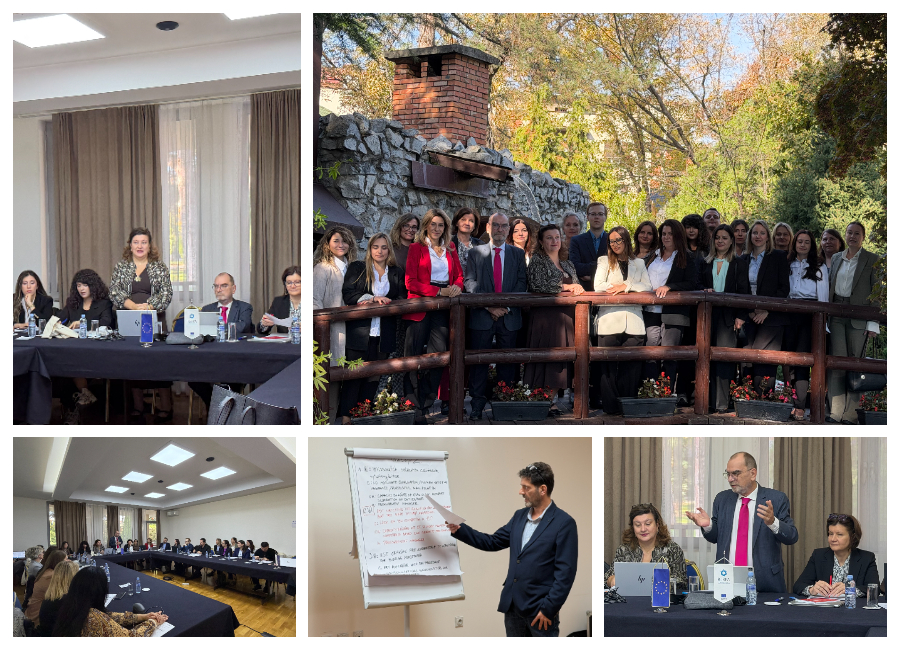
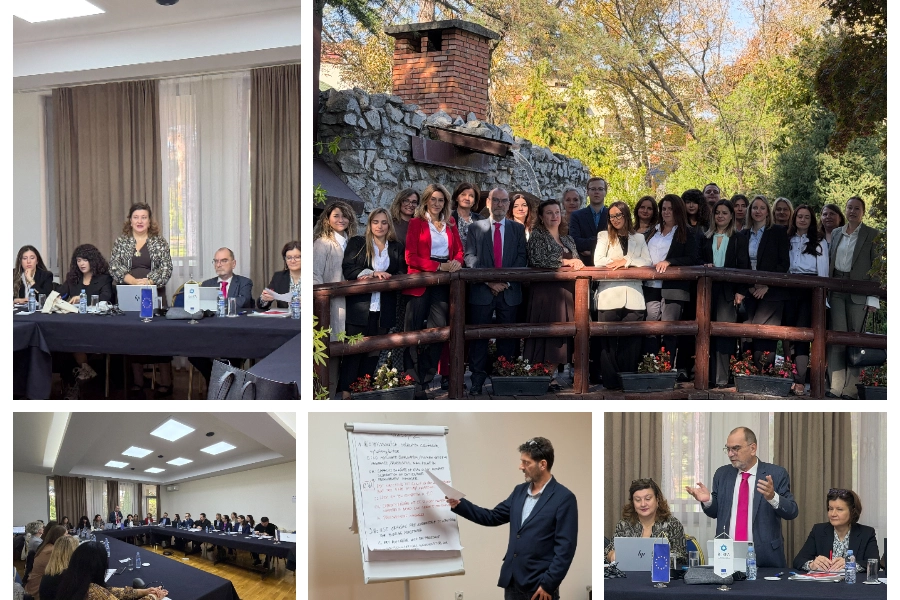
With this perspective, ReSPA, in cooperation with the Centre of Excellence in Finance (CEF) and SIGMA/OECD, brought together public procurement professionals and representatives of relevant institutions for the regional workshop “Smart Procurement 4 Strong Governance: Boosting Competition, Digitalisation and Value for Money under the EU Growth Plan,” held on 20–21 October in Skopje.
For public servants from the Western Balkans, Ukraine, Moldova and Armenia, the workshop provides an important space to move beyond formal compliance with procurement rules and focus on a more practical question: how can public procurement deliver better outcomes, stronger competition and greater value for citizens?
Rozalija Karchicka-Vasilevska, ReSPA Programme Manager, underlined: “By connecting practitioners facing similar challenges, the workshop helps turn regional experience into practical knowledge — and practical knowledge into better procurement decisions. For public servants, this means stronger tools and greater confidence to manage public resources responsibly; for institutions, it means more transparent, competitive and results-oriented procurement; and ultimately, for citizens, better value from public spending.”
The programme addresses some of the most relevant challenges faced by public administrations today. Participants discuss the current state of public procurement systems, including legal alignment, institutional arrangements, enforcement gaps and practical implementation, drawing on findings from SIGMA monitoring and examples of good practice from the region.
A strong focus is placed on competition and market participation, particularly the challenge of single-bid tenders and the ways better tender design, market consultation and outreach can help administrations attract more bidders and strengthen competition.
The workshop also looks at how institutions can move from a predominantly price-based approach towards a broader understanding of value for money, including the use of the Most Economically Advantageous Tender criterion, life-cycle costing, green and innovation-friendly procurement and stronger contract management. Participants also explore professional standards and the competencies needed to improve quality assurance and contract implementation.
The second day brings digitalisation and integrity to the centre of the discussion. Participants examine the interoperability and functionality of e-procurement systems, as well as the use of open-contracting and beneficial-ownership data to identify risks such as collusion, conflicts of interest and hidden ownership. Practical exercises on red flags and mitigation measures help translate these concepts into tools that can be applied in everyday institutional work.
An important added value of the workshop is its strong peer-learning dimension. Representatives of procurement institutions, contracting authorities, review bodies, and oversight institutions exchange practical experience, challenges and solutions from their own administrations. The workshop concludes with a Reform Design Lab, where participants develop concrete country-specific action points for priority procurement reforms and refine them through peer feedback.
This practical approach makes the workshop particularly relevant for administrations across the Western Balkans and Eastern Neighbourhood. While institutional systems and reform stages may differ, many of the challenges are shared: how to strengthen competition, use data more effectively, reduce procurement risks, professionalise procurement functions and ensure that public spending produces measurable results.