

ReSPA, SIGMA and Czech Partners Convene Regional Conference in Prague to Strengthen Parliamentary Scrutiny and Evidence-Based Law-making
8-9 April 2026, Prague, Czech Republic
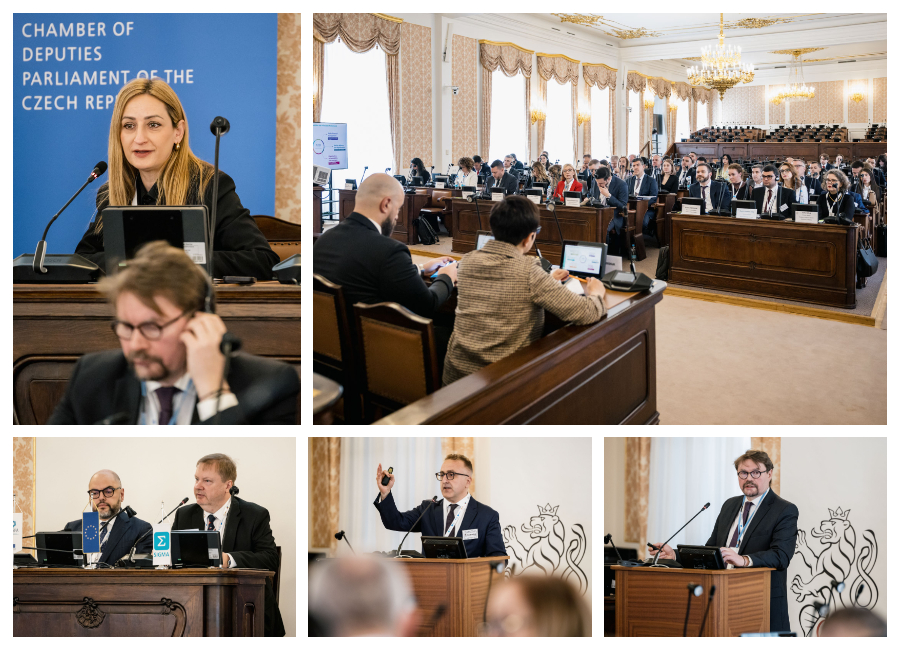
More than 60 senior parliament and government officials, experts and representatives of international organisations from the Western Balkans and Eastern Neighbourhood gathered in Prague for the regional conference “Strengthening Parliamentary Scrutiny and Lawmaking: Challenges and Opportunities in the Western Balkans and Eastern Neighbourhood”.
The two-day conference, held at the Chamber of Deputies of the Parliament of the Czech Republic, is jointly organised by the SIGMA Programme, ReSPA and GIZ, in close partnership with the Chamber of Deputies of the Parliament of the Czech Republic and the Government Office of the Czech Republic, with the support of the European Commission’s DG ENEST.
The event builds on the long-standing co-operation between ReSPA and SIGMA in supporting public administration reform, evidence-based policymaking and stronger parliamentary capacities across the region. The Czech institutions, particularly the Chamber of Deputies and its Parliamentary Institute, together with the Government Office of the Czech Republic, play a central role in delivering the activity, sharing practical experience and showcasing Czech approaches to legislative planning, parliamentary scrutiny and better regulation.
Participants from Albania, Armenia, Bosnia and Herzegovina, Kosovo*, Moldova, Montenegro, North Macedonia, Serbia and Ukraine are discussing how to strengthen evidence-based lawmaking, improve co-operation between governments and parliaments, advance parliamentary oversight and make better use of tools such as regulatory impact assessment, public consultation, post-legislative scrutiny and artificial intelligence.
Mr Martin Plíšek, Secretary General of the Chamber of Deputies of the Parliament of the Czech Republic, welcomed participants to Prague and underlined the importance of stronger parliamentary institutions and evidence-based legislative processes.
Mr Giulio Venneri, Deputy Head of Unit at DG ENEST of the European Commission, stressed that quality lawmaking and effective parliamentary scrutiny are essential for advancing EU integration and implementing reforms aligned with European standards.
ReSPA Director Maja Handjiska-Trendafilova, highlighted that effective parliaments and stronger collaboration between governments and legislatures are crucial for building public trust and ensuring that reforms deliver real results for citizens: “Parliamentary administrations and civil servants have a pivotal role in ensuring that legislation is prepared and scrutinised based on evidence, consultation and sound analysis. Through our partnership with SIGMA and Czech institutions, we are creating a platform for exchange and practical learning that can help administrations across the region strengthen their capacities and accelerate their EU integration paths.”
Mr Gregor Virant, Head of the SIGMA Programme, emphasised the importance of improving parliamentary procedures, strengthening professional capacities and ensuring closer co-operation between governments and parliaments throughout the legislative cycle. Joining via video,
Ms Sandra Fuhr, Project Manager of the GIZ Eastern Partnership Public Administration Reform Project, highlighted the value of regional co-operation and peer learning among the participating administrations.
The first thematic session set the scene for the discussions by presenting the main challenges affecting evidence-based lawmaking and parliamentary scrutiny in the region. Mr Bagrat Tunyan of the SIGMA Programme presented key findings from the Principles of Public Administration, SIGMA regional studies and country monitoring reports. He outlined persistent challenges such as the excessive use of urgent procedures, limited use of ex ante and ex post analysis, weak co-ordination between governments and parliaments and insufficient institutional capacities to support legislative scrutiny.
A central feature of the conference is the contribution of Czech institutions. During the session dedicated to Czech experience, Mr Štěpán Pecháček from the Parliamentary Institute of the Chamber of Deputies presented the Czech approach to evidence-based lawmaking and parliamentary scrutiny. He explained the internal procedures and analytical tools used by the Czech Parliament to support scrutiny of draft legislation, highlighting the importance of research services, parliamentary analysis and stronger co-operation between committees and experts.
The conference also features significant contributions from the Government Office of the Czech Republic and the Parliamentary Institute on the second day. Mr Štěpán Růt from the Government Analytical Unit of the Government Office of the Czech Republic and Mr Martin Kuta from the Parliamentary Institute presented Czech experience in legislative planning, co-ordination and the use of “preliminary consultation” between the government and parliamentary committees before draft laws formally enter the legislative process.
The high-level panel with Secretaries General of parliaments focused on the practical difficulties parliamentary administrations face in planning, preparing and scrutinising draft laws. The panel brought together: Mr Davit Arakelyan, Secretary-General of the National Assembly of Armenia, Ms Gordana Živković, Secretary of the House of Peoples of the Parliamentary Assembly of Bosnia and Herzegovina, Mr Boban Stanišić, Secretary-General of the Parliament of Montenegro, Mr Nikola Gjoshevski, Deputy Secretary-General of the Parliament of North Macedonia and Mr Artem Yanchuk, Deputy Secretary-General of the Verkhovna Rada of Ukraine. Moderated by Ms Egle Rimkute of SIGMA, the discussion examined the growing pressures on parliaments to process increasingly complex legislation, particularly in the context of EU accession and the acquis harmonisation. Speakers highlighted challenges related to the frequent use of shortened procedures, the increasing number of laws initiated by MPs without sufficient evidence or consultation, and the limited role of parliaments in reviewing whether adopted legislation actually delivers its intended results.
The afternoon session brought together senior parliament and government officials to discuss how closer co-operation between the executive and legislative branches can improve the quality of lawmaking. The panel included: Mr Robert Vidović, Secretary-General of the Council of Ministers of Bosnia and Herzegovina, Ms Tamara Gheorghița, Deputy Secretary-General of the Parliament of Moldova, Mr Arben Loshi, Director for Research and Analysis in the Parliament of Kosovo*, Ms Julia Çela, Director General of the European Integration Service of the Parliament of Albania, Ms Irena Vučić Popović, Deputy Secretary-General of the Government of Montenegro and Mr Saša Marković, Assistant Secretary-General of the General Secretariat of the Government of Serbia. Moderated by Mr Péter Vági of SIGMA, the discussion addressed how governments and parliaments can improve the exchange of data, documents and analysis, strengthen legislative planning and ensure that draft laws are accompanied by better evidence and consultation. Participants stressed that stronger co-ordination is particularly important when preparing legislation related to EU integration, where large numbers of complex laws often need to be adopted in a short timeframe.
The final session of the first day explored how the European Parliament and OECD countries use evidence and evaluation to improve the quality of laws. Mr Wolfgang Hiller, former Director for Impact Assessment and Foresight at the European Parliamentary Research Service, presented the analytical tools and support services used by the European Parliament to improve legislative quality and strengthen better regulation. Mr Franklin De Vrieze of the Westminster Foundation for Democracy discussed the importance of post-legislative scrutiny and ex post evaluation, highlighting how parliaments can use these tools to determine whether adopted laws have achieved their intended objectives. The session was moderated by Ms Nataliia Gnydiuk from GIZ.
The second day of the conference continued with discussions on better regulation, legislative planning, staff professionalisation and the use of artificial intelligence in parliamentary work. Mr Daniel Trnka, Deputy Head of the OECD Regulatory Policy Division, will present the findings of the OECD 2025 Better Regulation Practices Across the EU study and discuss how simplification and burden reduction can be advanced through stronger regulatory management.
A dedicated session on legislative planning and co-ordination included: Mr Serhii Kotsurak, Secretariat of the Cabinet of Ministers of Ukraine, Mr Eris Çela, Prime Minister’s Office of Albania, Mr Štěpán Růt, Government Office of the Czech Republic, Ms Lilia Dabija, Government of Moldova, Ms Anahit Stepanyan, Prime Minister’s Office of Armenia, Mr Martin Kuta, Parliamentary Institute of the Czech Republic. The session, moderated by Ms Jelena Mrdak, ReSPA Programme Manager, examined how governments can improve legislative planning and how closer co-ordination with parliaments can support better scrutiny and more effective lawmaking.
Participants also discussed the professionalisation of parliamentary staff during a session moderated by Mr Lech Marcinkowski of SIGMA, including: Ms Tetiana Topolianska, Verkhovna Rada of Ukraine, Mr Aleksandar Đorđević, National Assembly of Serbia, Ms Tatiana Malai, Parliament of Moldova, Ms Heghine Khachikyan, National Assembly of Armenia, and Ms Holta Nika, Parliament of Albania. The discussion focused on human resource management, recruitment, retention, training and safeguarding the political neutrality of parliamentary staff.
The conference concluded with a forward-looking session on the future of lawmaking and the use of artificial intelligence and emerging technologies in parliaments. Mr Franklin De Vrieze presented international guidelines for the use of AI in parliaments, while participating administrations shared examples of new technological tools used to support legislative drafting, analysis and oversight. The session was moderated by Mr Giulio Venneri of the European Commission.
The event concluded with closing remarks from the European Commission, the Chamber of Deputies of the Parliament of the Czech Republic, ReSPA, GIZ, and SIGMA, reaffirming their joint commitment to continue supporting stronger parliamentary institutions, better regulation, and evidence-based lawmaking across the Western Balkans and the Eastern Neighbourhood.