

Thessaloniki Summit: Investing in capacities of public servants is the foundation of better quality of public services
19 May 2026, Thessaloniki, Greece
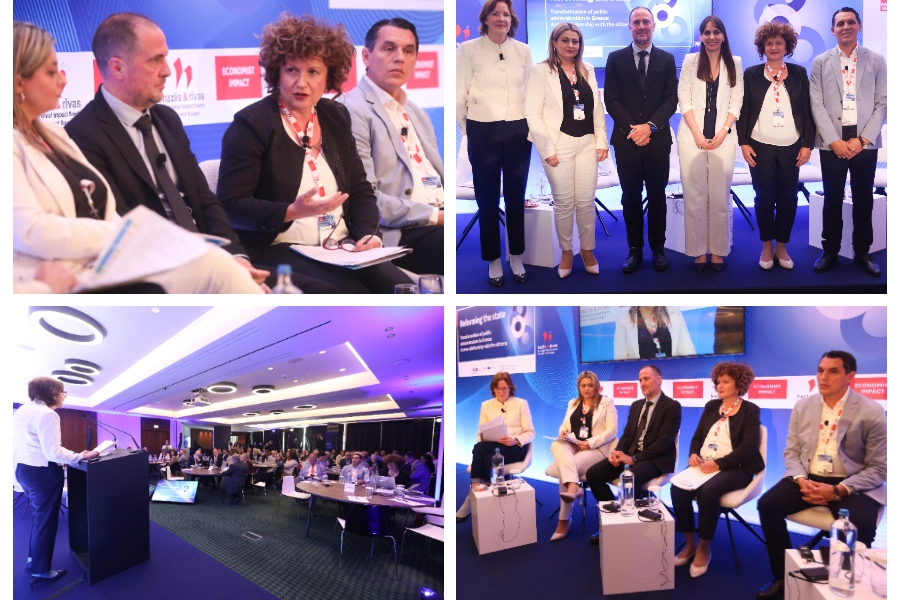
How can governments become more responsive, efficient and truly citizen-centred? This was the key question driving discussions at the international conference “Reforming the State: Transformation of Public Administration in Greece - A New Relationship with the Citizens”, organised by Economist Impact and Hazlis & Rivas in partnership with the Government of Greece and the National Centre for Public Administration and Local Government (EKKDA). The conference brought together senior government officials, international experts, representatives of EU institutions, and leaders from the private sector and public administration from across the region to discuss the future of governance and public sector transformation.
Throughout the day, discussions explored how governments can modernise public administration systems through digitalisation, stronger coordination, workforce transformation, innovation, and international cooperation. Particular attention was dedicated to the role of public servants in shaping responsive institutions capable of addressing increasingly complex societal and economic challenges.
Opening the conference, Joan Hoey, Europe Consultant at the Economist Intelligence Unit (EIU), set the tone for a day focused on innovation, trust, and transformation in governance. Welcoming participants, Kostas Gioulekas and Vivi Charalampogianni, deputy ministers of the interior, highlighted Greece’s commitment to building a modern administration that puts citizens at the centre of public services and presented innovative approaches in delivering public services, including use of AI.
The first panel, “Public Administration at the Heart of Policy Priorities”, examined how governments can better align governance reforms with today’s social and economic challenges. Pannelists Evi Dramaloti, secretary general for coordination, Presidency of the Government of Greece; Pavlina Karasiotou, secretary general for fiscal policy, Ministry of Finance; Dimosphenis Anagnostopoulos, secretary general for information systems and digital governance, Ministry of Digital Governance; Dimitrios Caramitsos -Tziras, ambassador, director general for international development cooperation and humanitarian aid, Ministry of Foreign Affairs (online); Giannis Foustanakis, secretary general for public administration, Ministry of Interior and Vasilis Exarchos, president, National Centre for Public Administration and Local Government emphasized that effective public administration today depends on strong coordination, digital transformation, and institutions capable of responding quickly to complex and evolving needs.
A fireside chat with Athanasios Papaioannou, Athanasios Papaioannou, president of the Greek Supreme Council for Civil Personnel Selection (ASEP), focused on a digital platform for assessing the 9 skills needed for public service. The results were assessed thanks to the digital tools immediately
At the panel showcasing innovative platforms and systems that improve efficiency, transparency, interoperability, and user experience across public administration, including speakers Eleni Mavrogeorgi, inspector auditor, head of subsector for disciplinary procedure monitoring, National Transparency Authority; Konstantinos Kaparos, deputy head of the general directorate of public administrative procedures, Ministry of the Interior; Antonis Psarakis, official of the department for public organizations, Ministry of the Interior; Angeliki Faitaki, head of MIS Operation Section, Ministry of the Interior; Spyros Koureas, head of the Directorate of NGO’s and Public Benefit Bodies, Ministry of the Interior and Angeliki Bourbouli,
The conference also featured a fireside discussion with Corina Crețu, currently the Romanian Consul General in Thessaloniki, who reflected on European governance reforms and regional cooperation.
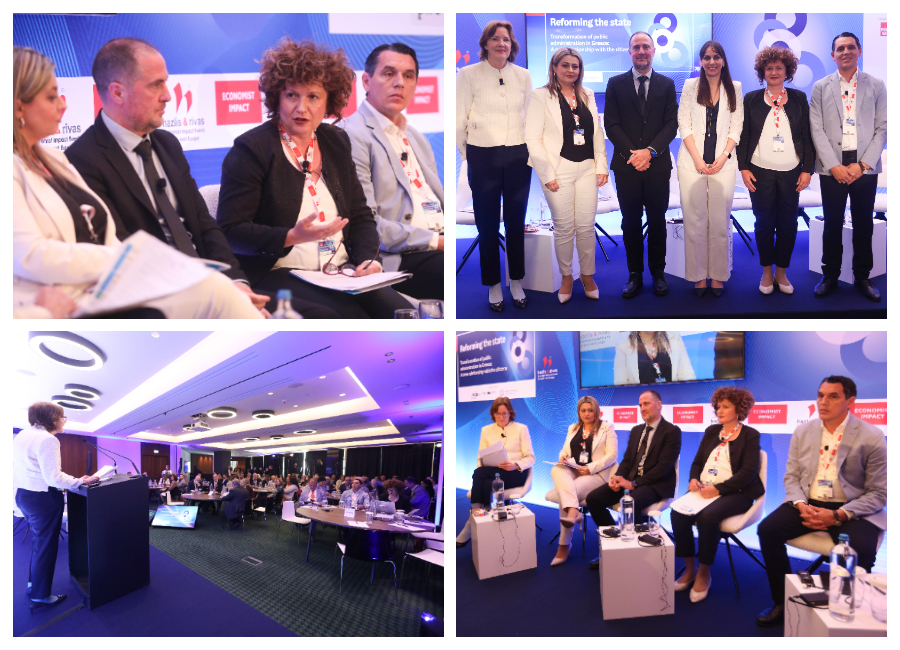
One of the central discussions of the summit focused on workforce development and the future skills needed in public administration. The panel “Enhancing Citizen Services through Workforce Upskilling” brought together Vasiliki Kakosimou, Vice-President of the National Centre for Public Administration and Local Government (EKKDA); Pavel Ivanov, Executive Director of the Institute of Public Administration of Bulgaria; Jelena Mrdak, Director a.i. of ReSPA; and Agron Medziti, Head of the Academy for Training at the Ministry of Public Administration of North Macedonia. The discussion focused on how continuous learning, digital skills, leadership culture, adaptability, and citizen-centred approaches can improve the quality, efficiency, and accessibility of public services.
Representing ReSPA, Director a.i. Jelena Mrdak stressed that the future of public administration depends not only on technology and procedures, but above all on the capabilities, values, and adaptability of the people delivering public services.
“At ReSPA, we strongly believe that the quality of public services will always depend on the skills and capabilities of the people delivering them. Technology matters. Processes matter. But ultimately, citizens experience governance through interactions with public servants. This means that modern public administrations need new skills — digital skills, leadership skills, analytical and problem-solving skills — but also empathy, adaptability, collaboration, and citizen-oriented thinking,” underlined Mrdak.
During the discussion, ReSPA highlighted several regional initiatives supporting the development of future-ready administrations across the Western Balkans, including e-government pilots, mobility programmes for civil servants, leadership development initiatives, and the Public Administration Awards organised together with SIGMA. These initiatives aim to strengthen institutional capacities, encourage innovation, and improve the everyday experience of citizens interacting with public services.
The final panel explored how international organizations, technical assistance, and public-private cooperation can support sustainable public administration reforms, including Kjartan Bjornsson, head of Unit, Governance and Public Administration, SG REFORM, European Commission; Katerina Papanikolaou, consulting, workforce transformation, Director, PwC; Dimitra Ioannou, projects coordinator, Governance and administrative transformation in Greece, Expertise France and Francesco Leone, diplomatic advisor to the Minister for Public Administration, Italy
The conference concluded with a shared message: the success of public administration reform is measured not only through legislation or digital platforms, but through whether citizens genuinely experience public institutions as accessible, responsive, trustworthy, and human-centred.