

ReSPA Participation in the 4th WeBER Regional Conference: “Citizens First – A Decade of Advancing Citizen-Centred PAR”
The 4th WeBER Regional Conference, held on 10–11 June 2026 in Belgrade, gathered representatives of public administrations, civil society organizations, international organizations, academia, and development partners from across the Western Balkans to discuss progress and future priorities in citizen-centred public administration reform.
The conference was opened by Milena Mihajlović Denić, WeBER Team Leader and Programme Director at CEP, together with keynote speakers H.E. Andreas von Beckerath, Ambassador and Head of Delegation of the European Union to Serbia, representatives of GIZ, Goran Minchev, Minister of Public Administration of North Macedonia, Marash Dukaj, Minister of Public Administration of Montenegro (video address), and Gregor Virant, Head of OECD/SIGMA. The speakers emphasized the importance of placing citizens at the centre of public administration reform and service delivery.
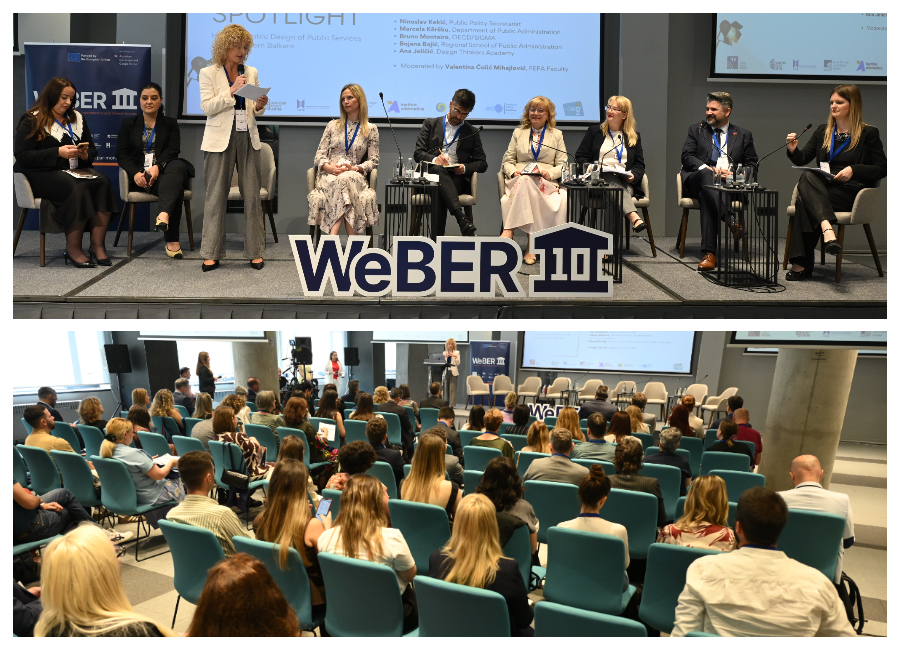
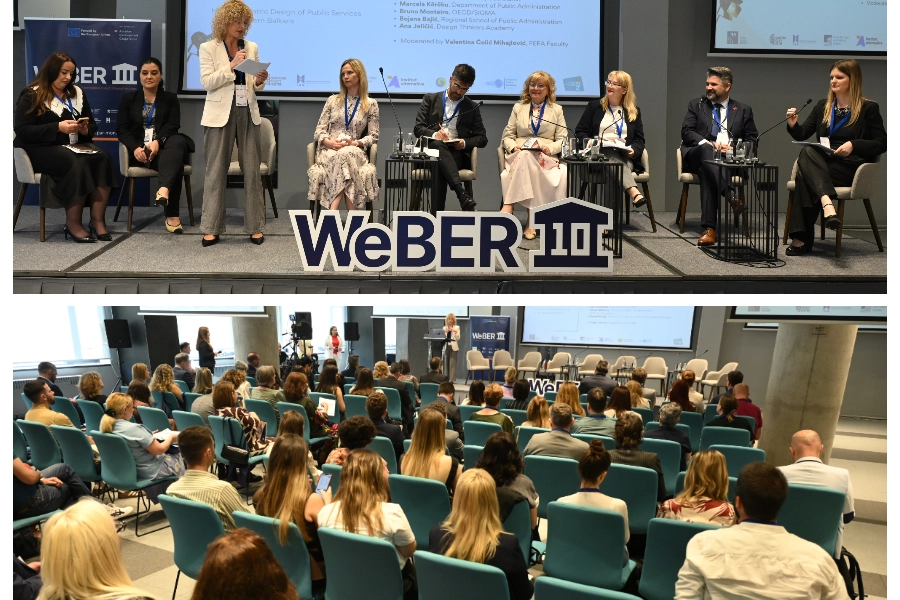
A key session focused on Human-Centric Design of Public Services in the Western Balkans, where experiences from WeBER Policy Labs were presented by Njomza Arifi (GLPS), Simonida Kacarska (EPI), and Milena Mihajlović Denić (CEP). The panel discussion featured Ninoslav Kekić (Public Policy Secretariat of Serbia), Marcela Kërëku (Department of Public Administration of Albania), Bruno Monteiro (OECD/SIGMA), Bojana Bajić (ReSPA), and Ana Jeličić (Design Thinkers Academy), moderated by Valentina Čolić Mihajlović (FEFA Faculty). ReSPA contributed by presenting regional experiences related to digital transformation, interoperability, digital identity, trust services, and citizen-centred public service delivery.
The conference also presented the findings of the Western Balkan PAR Monitor 2024/2025, led by Miloš Đinđić, together with Milica Divljak and Milica Škorić, providing an overview of progress and challenges in public administration reform across the region. Discussions involved representatives of ministries and PAR institutions from the Western Balkans, as well as OECD/SIGMA experts including Egle Rimkute, Klas Klaas, Peter Vagi, and Bruno Monteiro.
Particularly relevant for ReSPA’s work were the breakout sessions on Human Resources, Service Delivery and Digitalisation, where discussions focused on how digital transformation, interoperability, and service redesign can improve citizens’ experiences with public administration. OECD/SIGMA representatives highlighted the importance of linking digitalisation with process simplification, institutional reform, and human-centred service design.
The second day of the conference focused on practical examples of applying design thinking and participatory approaches through projects implemented by WeBER grantees. Civil society representatives from across the region presented successful initiatives aimed at involving citizens in policy development and service design, demonstrating the value of co-creation, user testing, and continuous feedback mechanisms.
The conference concluded with reflections on the future of public administration reform beyond 2026. In her closing remarks, Milena Mihajlović Denić summarized the key messages of the conference, while Bruno Monteiro (OECD/SIGMA) emphasized the need to institutionalize citizen-centred approaches and ensure that digital transformation, innovation, and public administration reform remain focused on delivering tangible benefits for citizens.
The event reaffirmed the shared commitment of governments, civil society organizations, OECD/SIGMA, ReSPA, the European Union, and development partners to continue promoting citizen-centred governance, innovation, digital transformation, and inclusive policymaking across the Western Balkans.