

From Legal Framework to a Functioning Institution: ReSPA Supports North Macedonia in Building Its Public Administration Academy
ReSPA is coordinating an intensive working process to translate North Macedonia’s vision for a modern Academy for Professional Training and Development of Administrative Servants into a concrete, time-bound and sustainable implementation plan.
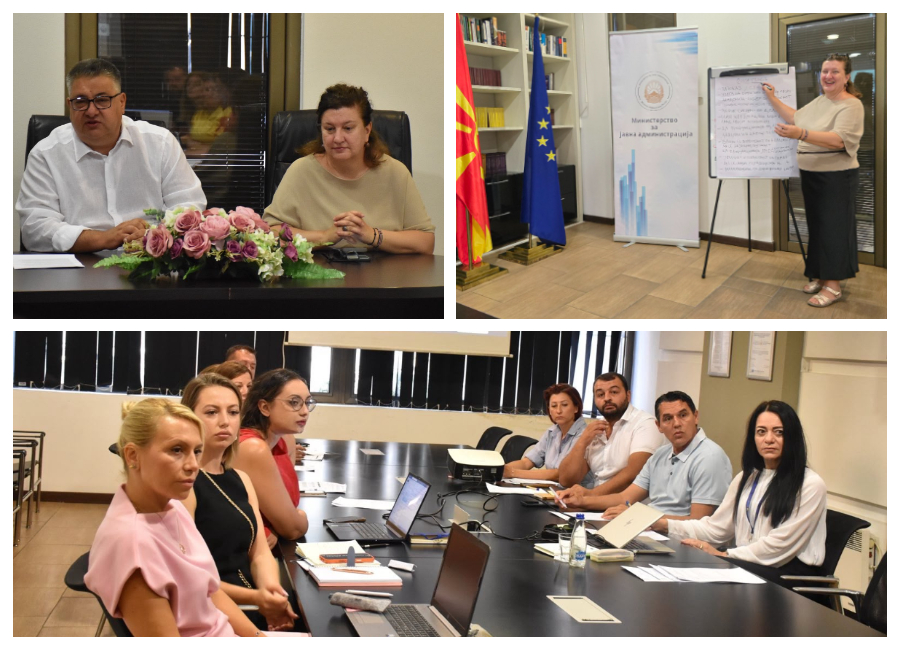
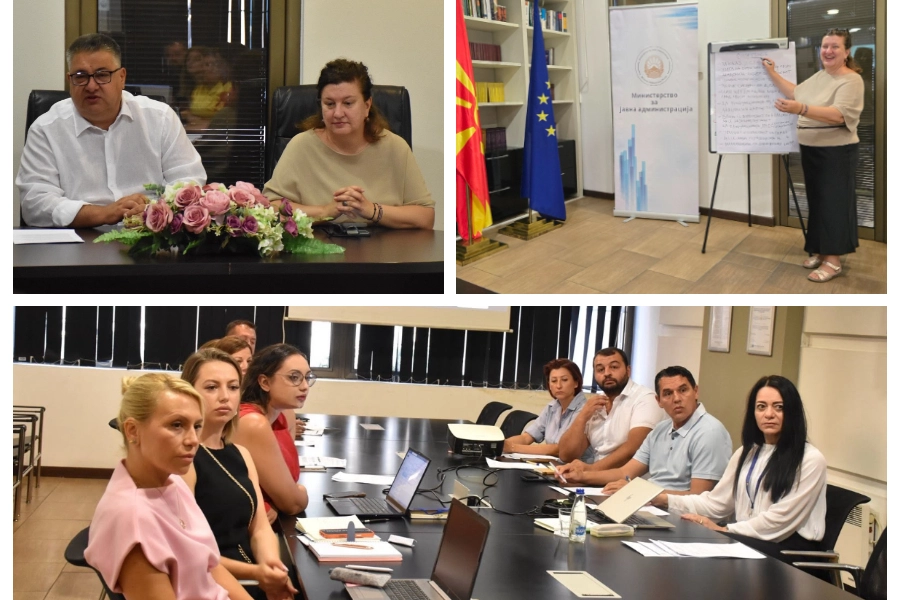
On 24 and 25 August 2026, representatives of the Ministry of Public Administration and the team of the newly established Academy for Professional Training and Development of Administrative Servants are meeting in Skopje for their first joint working session dedicated to planning the Academy’s operational establishment.
The two-day session is being coordinated and moderated by Rozalija Karchicka-Vasilevska, ReSPA Programme Manager, who underlined: “Establishing the Academy is not only about creating a new institution or organising training. It is about building a sustainable national system that connects competencies, continuous learning and knowledge management with the real needs of public administration. Our role at ReSPA is to guide this process through institutional mentoring, regional experience and practical expertise, while ensuring that national ownership remains at its core.”
“The Academy is not merely an institutional novelty. It is an investment in the quality, integrity and efficiency of public administration and, consequently, in citizens’ trust in institutions. The results of this workshop - the action plan, the responsibility matrix and the implementation timeline - are the foundation on which the Academy will genuinely grow into an operational institution within the Ministry of Public Administration". With these words, Minister of Public Administration of North Macedonia, Goran Minchev, opened the first working session.
The working group has a demanding task: to turn the already agreed strategic framework and four-phase roadmap into a practical plan that clearly defines activities, responsibilities, deadlines, required resources and potential risks. ReSPA is guiding the process, supporting the team in connecting individual activities into a coherent institutional development framework and ensuring that the planned solutions draw on relevant European standards and regional experience.
This support is particularly important because the Academy is not intended to become merely another training provider. Its establishment represents an important structural reform of North Macedonia’s public administration and human resource management system.
The country has a long tradition of organising training for administrative servants, but the existing system has remained fragmented, insufficiently connected to competency development and without a central institution responsible for strategically managing professional learning. The new Academy is expected to bring these elements together and create a national system for continuous professional development, competency and leadership building, knowledge management, digital learning, quality assurance and evaluation of training results.
On the first day, the working group reviewed the strategic framework and the four phases of the Academy’s development, assessed progress to date, and defined priority activities for the next 12 months. Particular attention was paid to the Academy’s institutional and organisational model, legal framework, internal procedures and initial operational arrangements.
The second day focuses on the conditions required to implement the plan. The group assessed the human, financial and technical resources needed for the Academy’s operation, including staffing requirements, financing, premises, equipment and the future Learning Management System.
Participants are also preparing a risk register covering possible legal, institutional, financial and implementation challenges. Each risk will be assessed according to its probability and potential impact, accompanied by proposed mitigation measures. The group is expected to produce five interconnected results: a detailed action plan; a clear matrix of institutional responsibilities; an overview of the required human, financial and technical resources; a register of implementation risks and mitigation measures; and a consolidated timeline for the Academy’s establishment.
These results will form the operational basis of the partnership between the Ministry and ReSPA and will also support preparations for the conference with development partners planned for 19 October 2026.
The one-year programme envisages the gradual development of the Academy through four phases.
The first phase focuses on institutional establishment, including the organisational model, operational plan and internal procedures. The second will develop the professional training system through training needs analysis, a competency model, curricula and a national training programme.
The third phase will concentrate on implementation capacities, including digital learning, Training of Trainers, the establishment of a national network of trainers and the delivery of pilot programmes. The final phase will address quality assurance, long-term development, donor coordination, infrastructure planning and institutional sustainability.
The Academy’s importance extends far beyond the organisation of training activities. A professional, accountable and citizen-oriented administration depends on civil servants who continuously develop the knowledge and competencies required to design policies, manage reforms, implement legislation and provide high-quality public services.
The Academy is therefore expected to become a national centre of excellence for professional learning, knowledge management and administrative capacity development. It
Throughout this process, the Ministry of Public Administration maintains ownership and leadership of the reform, while ReSPA provides institutional mentorship, expert support, comparative regional and European experience, peer learning opportunities and assistance in coordinating potential development partnerships.