

ReSPA’s High-Level Policy Dialogue: Call for Stronger Leadership and Digital Government People Can Trust
Belgrade, 18 November 2026.
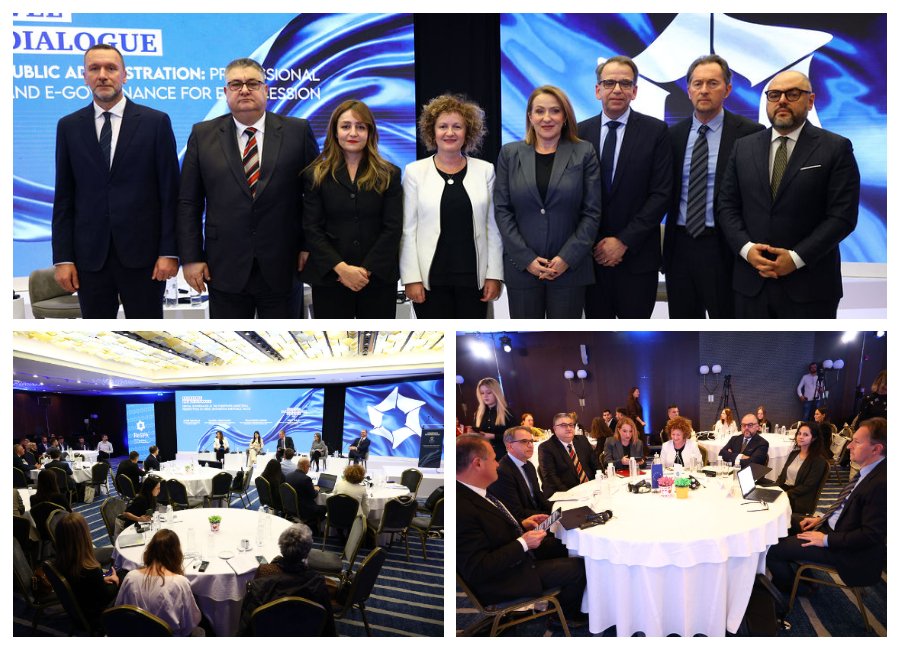
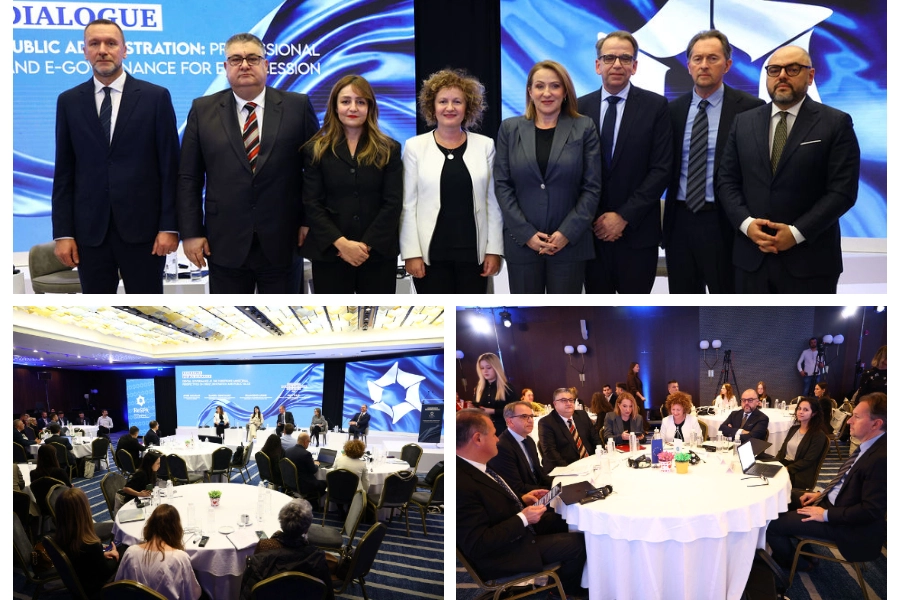
Public administration is future-ready when public servants have the skills to lead change and when its services earn the trust of citizens. This was the defining message of ReSPA’s High-Level Policy Dialogue 2026, held in Belgrade on 18 November, bringing together ministers, senior leaders, and public administration professionals from the Western Balkans, Armenia, Moldova, and Ukraine, the European Commission, EU Member States, and SIGMA.
Under the theme “Future-ready Public Administration: Professional Development and E-Governance for EU Accession”, the Dialogue focused on two mutually reinforcing priorities: investing in capable, ethical and motivated public servants, and using digital transformation to make government simpler, fairer and more responsive.
The Dialogue opened with remarks by Snežana Paunović, Serbia's Minister of Public Administration and Local Self-Government; Jelena Mrdak, ReSPA Director ad interim; and Gregor Virant, Head of the SIGMA Programme.
Giulio Venneri, Deputy Head of Unit for Enlargement Strategy and Coordination at the European Commission's Directorate-General for Enlargement and Eastern Neighbourhood, delivered the keynote address on professional development and administrative capacity as essential drivers of EU accession reforms.
Highlighting the significance of the gathering, Jelena Mrdak stated: "Europe’s future is shaped not only through laws and strategies, but through the people and institutions able to put them into practice. By bringing our regions together, ReSPA helps transform shared ambition into skills, solutions and public services that make a real difference. This is where ReSPA makes a real difference — turning cooperation into tangible results for the people we serve.“
The ministerial panel, "Future-Ready Administrations: Leading, Learning and Building Skills for Tomorrow," brought together Fotjona Tace (Albania), Nedžad Salman (Bosnia and Herzegovina), Goran Minčev (North Macedonia), Snežana Paunović (Serbia) and Peter Pogačar (Slovenia). Moderated by Jelena Mrdak, the discussion focused on strengthening professional leadership, continuous learning, merit-based career development and the institutional capacities needed to deliver effective public administration reform. The panel reinforced the importance of investing in public servants as a prerequisite for stronger institutions, successful EU integration and better public services.
The second panel, "Digital Governance at the Forefront: Ministerial Perspectives on Trust, Innovation and Public Value," brought together Avnik Melikian (Armenia), Sandra Senichault (France), Francesco Leone (Italy) and Nick Thijs (SIGMA Programme). Moderated by Rozalija Karchicka Vasilevska, ReSPA Programme Manager, the exchange addressed digital transformation as a driver of more accessible, integrated and efficient public services, with particular attention to innovation, responsible technology adoption and public trust.
As Rozalija Karchicka-Vasilevska highlighted: "Digital transformation is not only about technology. It is about improving how institutions work together and how citizens experience public services. By exchanging perspectives and practical solutions across our regions, we can accelerate reforms that make administrations more accessible, responsive and trustworthy."
A central milestone of the Dialogue was the presentation of the Ministerial Joint Statement on Professional Development and E-Governance, endorsed at ReSPA's 18th Governing Board Meeting on 17 November.
The Statement reaffirmed a shared commitment to keeping public administration reform at the heart of EU accession, with a particular focus on:
- Professional, merit-based civil services: Promoting continuous learning, ethical leadership and competency-based professional development, while strengthening public administration schools and investing in the skills needed for future-ready institutions.
- Human-centred digital government: Delivering simpler procedures, accessible and integrated public services, strengthening digital competencies and promoting the responsible use of artificial intelligence, while safeguarding cybersecurity, data protection and public trust.
- Regional cooperation, learning and mobility: Expanding professional networks, peer learning, knowledge exchange and civil servant mobility across the Western Balkans, EU Member States and Eastern Partnership administrations to accelerate reforms and share proven solutions.
- A stronger role for ReSPA: Reinforcing ReSPA as a regional hub for professional development and digital governance, translating political commitments into practical programmes, stronger partnerships, shared knowledge and measurable improvements in public administration performance and service delivery.
Presenting the Statement, Boris Ristović, ReSPA Programme Manager/Coordinator, emphasised: "This Joint Statement sets a shared direction for turning reform ambitions into tangible results. ReSPA’s role is to translate political commitments into practical cooperation, stronger institutions and better public services. Ultimately, our success will be measured by the difference citizens experience in their everyday lives."
The Dialogue also featured the 2026 Public Administration Awards Ceremony, organised by ReSPA and the SIGMA Programme, celebrating innovation and outstanding public sector initiatives. With a record 67 applications and participation from Eastern Neighbourhood administrations for the first time, the Awards demonstrated the growing impact of public administration cooperation across both regions. The ceremony was moderated by Jelisaveta Tasev, ReSPA Programme Manager, and Bruno Monteiro, SIGMA Senior Policy Advisor for Service Delivery and Digital Government.
The Dialogue concluded with a shared challenge for all partners: progress should be judged not merely by strategies adopted or systems launched, but by institutions that perform better—and by citizens and businesses who experience government as more accessible, efficient and trustworthy.