

ReSPA Brings Regional Expertise to High-Level KosovaPAR 2026 Conference
ReSPA contributed to the high-level KosovaPAR 2026 International Conference on Public Administration in Prishtina through three complementary areas at the heart of modern public administration reform: professionalisation of the civil service, digital transformation and public financial management.
Held under the theme “Public Value and the Common Good – People, Trust and Digitalisation,” KosovaPAR 2026 brought together senior political representatives, public administration leaders, the diplomatic community, EU and international partners, academics and leading practitioners to discuss how public institutions can move beyond formal reform commitments and deliver tangible value for citizens.
The Conference was officially opened by Prime Minister Albin Kurti, Minister of Digitalisation and Public Administration Lulëzon Jagxhiu, and Alexis Hupin, Chargé d’Affaires of the European Union Office in Kosovo*. In his opening remarks, Prime Minister Kurti stressed that public administration is a fundamental pillar of democracy, economic development and citizens’ trust, and that the success of reforms must ultimately be judged by the practical changes they bring to people’s lives.
The high-level dimension continued through a ministerial plenary bringing together Minister Jagxhiu, Marash Dukaj, Minister of Public Administration of Montenegro; Goran Minchev, Minister of Public Administration of North Macedonia; and Maja Vitaljić, Acting General Director of the Directorate for the Digital Economy, moderated by Nick Thijs, Senior Policy Advisor at OECD/SIGMA. The Conference also welcomed representatives of the diplomatic corps, EU institutions and international partners, reinforcing KosovaPAR as an important platform for dialogue on the future of public administration in the region.
ReSPA’s contribution reflected the interconnected nature of public administration reform, with Caroline Socie, Bojana Bajić and Rozalija Karchicka-Vasilevska contributing to discussions from three distinct but mutually reinforcing perspectives.
Caroline Socie, Adviser at ReSPA and French expert, joined the panel “Professionalising Public Administration: Merit, Skills, Digital Learning and Talent Retention”, together with representatives and experts from Portugal and France. The discussion addressed a core condition for sustainable reform: building professional public administrations capable of attracting, developing and retaining the skills required by increasingly complex and digital public sectors. Her participation also reflected ReSPA’s role in connecting regional administrations with expertise and practices from EU Member States, helping translate comparative experience into practical approaches adapted to the needs of public administrations in the Western Balkans.
Bojana Bajić, ReSPA Digital and Innovation Officer, contributed to the plenary “From Reform to Results: Better Services, Trust and Accountability”, alongside Dr Mesi Hoxha, Senior Advisor to the Minister of Digitalisation and Public Administration; Artan Dreshaj, Acting Secretary General of the Ministry; Nick Thijs of OECD/SIGMA; and Jana Repanšek, Director of the Center of Excellence in Finance, Slovenia. Her message was clear: public administration reform cannot be measured only by strategies adopted, laws amended or the number of services digitalised. What matters is whether citizens and businesses experience simpler procedures, faster and more reliable services, fewer administrative burdens and better interaction with institutions. Bajić emphasised that digital transformation must go beyond transferring existing procedures online. “Administrations should move from digitalising procedures to transforming services, from adopting strategies to delivering results, and from introducing technologies to creating real public value. We need to make institutions work better for people,” she stressed. This means putting users at the centre of service design, applying the once-only principle wherever possible, strengthening cooperation between institutions and ensuring that digital solutions remain accessible, inclusive and genuinely useful. Trust, she underlined, is ultimately built when institutions deliver on their commitments, communicate transparently, take responsibility for results and continuously improve.
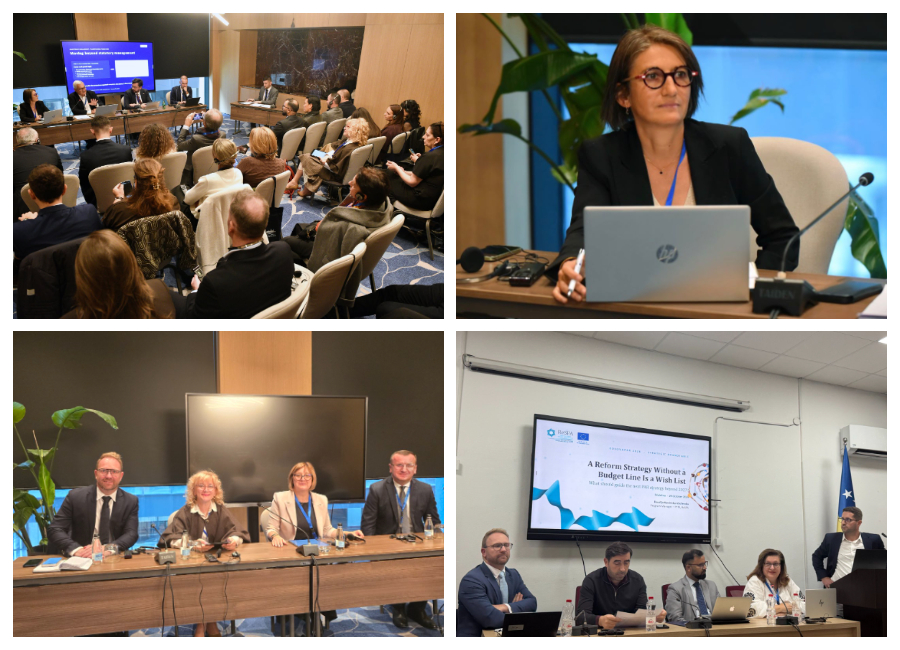
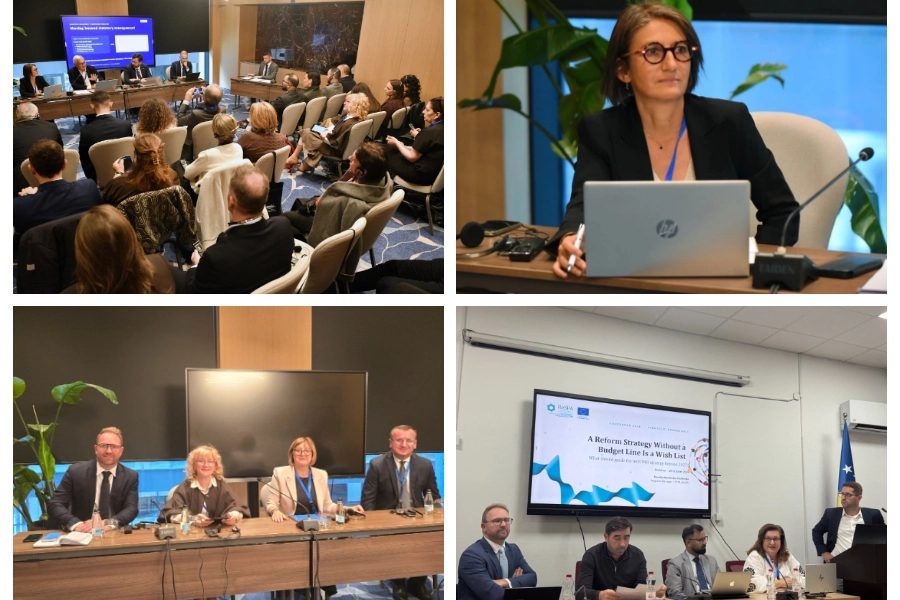
On the second day of the Conference, Rozalija Karchicka-Vasilevska, ReSPA Programme Manager for Public Financial Management, participated in the strategic roundtable “What Should Guide Kosova’s Next Public Administration Reform Strategy Beyond 2027?”, alongside representatives of the Office of the Prime Minister, OECD/SIGMA, the Ministry of Digitalisation and Public Administration and international participants.
Karchicka-Vasilevska put forward three recommendations for the next generation of PAR strategies:
First, PAR and public financial management need to be brought much closer together, with PFM embedded at the roots of reform. Across the region, PAR and PFM strategies have often developed along parallel tracks, with separate plans, ownership structures, budgets and monitoring systems. Future PAR strategies, she argued, should therefore be properly costed, connected to medium-term budget frameworks and supported by robust internal control and accountability mechanisms. To further this agenda, ReSPA plans to open a regional discussion in 2027 on the operational links between PAR and PFM.
Second, regional cooperation should become part of the implementation architecture of reform rather than an additional activity. Reform strategies often face their greatest challenges not in design, but during implementation. Regional peer learning and structured cooperation with EU Member States can provide administrations with faster and more cost-effective access to tested solutions, expertise and practical lessons.
Third, administrations need to move from reform outputs to results that citizens and businesses can actually experience. Success should therefore be assessed through service quality, reliability, reduced administrative burden and other measurable improvements in everyday interaction with public institutions – an approach fully aligned with ReSPA’s broader shift from public administration reform towards public administration excellence.
To make this approach operational, she proposed five questions that should be asked before any major reform measure is approved or financed: Is it costed? Is it in the budget? Who owns it? Who has done it before? What will citizens notice?
“A reform strategy without a budget line is a wish list. No administration in the region has to solve these problems alone. The next PAR strategy must be financed, shared and measured by results that citizens can see,” underlined Karchicka-Vasilevska.
ReSPA’s presence across these three substantive tracks illustrated a broader message emerging from KosovaPAR 2026: professional people, well-designed digital services and credible financial planning cannot be treated as separate reform agendas. By contributing expertise on civil service professionalisation, digital transformation and public financial management, ReSPA reinforced its role as a regional platform that connects administrations, EU expertise and practical reform experience – helping institutions not only design better reforms, but implement them and translate them into visible improvements for citizens and businesses.
This approach is at the core of ReSPA’s evolving ambition: to support the region in moving from public administration reform to public administration excellence – from plans and processes to institutions that consistently deliver results people can trust.
* This designation is without prejudice to positions on status and is in line with UNSCR 1244 and ICJ opinion on the Kosovo Declaration of Independence.