

ReSPA Brings Regional Leaders to Budva to Advance Better Regulation and Stronger Policy Coordination
16–17 June, Budva, Montenegro
ReSPA convened public administration representatives from the Western Balkans and the Eastern Neighbourhood in Budva for a high-level meeting of the Thematic Group on Policy Management, Better Regulation and Simplification. The two-day gathering created a dynamic platform for dialogue, peer learning and collaboration on strengthening policymaking, regulatory reform and public administration performance across the region.
As administrations move closer to the European Union, they face growing demands to enhance strategic planning, policy development, coordination, implementation, monitoring and evaluation. Against this backdrop, participants explored practical ways to build stronger institutions and deliver more effective, citizen-focused policies.
Opening the event, Boris Ristović, ReSPA Programme Coordinator, emphasised the importance of the Thematic group for future ReSPA programming, and then presented the new European Commission grant, ReSPA’s strategic priorities and the 2026 Plan of Work, sparking discussions on future regional cooperation and support in policy management, better regulation and simplification, underlining: “Thematic groups are not just standard activities, but of the core ReSPA implementation and cooperation instruments, bringing together public policy professionals from centres of governments and governmental bodies in charge of the policy development, better regulations and administrative burden reduction. As the standing platforms – Thematic groups enable continuous peer exchanges, active cooperation, and provide ReSPA with concrete information on direct needs of the beneficiary administrations to address the ongoing PAR challenges.”
A key highlight of the meeting was the contribution of Martins Krievins, Senior Policy Advisor at SIGMA/OECD, who examined the role of Centres of Government through the lens of SIGMA Principles. His presentation underscored the importance of strong coordination mechanisms, clearly defined institutional responsibilities and effective links between policy planning, implementation and reform delivery.
Throughout the first day, representatives from the Western Balkans and the Eastern Neighbourhood shared updates on their policy development and coordination systems. Participants exchanged experiences, compared approaches and identified common challenges, while showcasing successful practices that can strengthen policymaking across the region.
Discussions focused on improving the quality, accessibility and efficiency of services for citizens and businesses through stronger public administration reforms. Participants paid particular attention to the role of Centres of Government in driving strategic coordination, aligning reform priorities with government objectives and ensuring effective policy implementation.
On the second day, Martins Krievins led a comparative review of policy development and coordination practices across the Western Balkans and the Eastern Neighbourhood. The session highlighted emerging trends, persistent challenges and new opportunities, helping participants identify areas where ReSPA can provide targeted support.
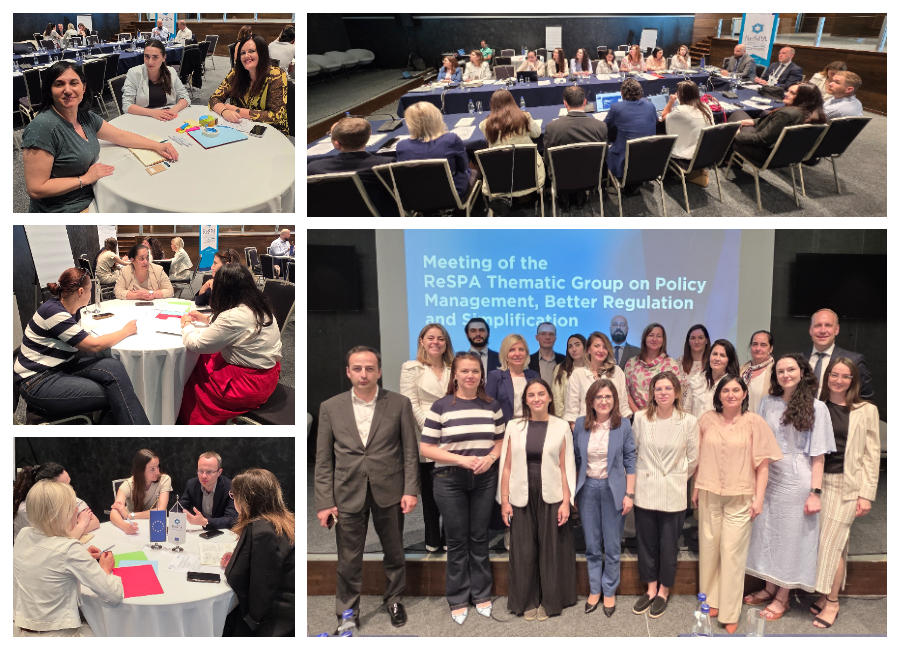
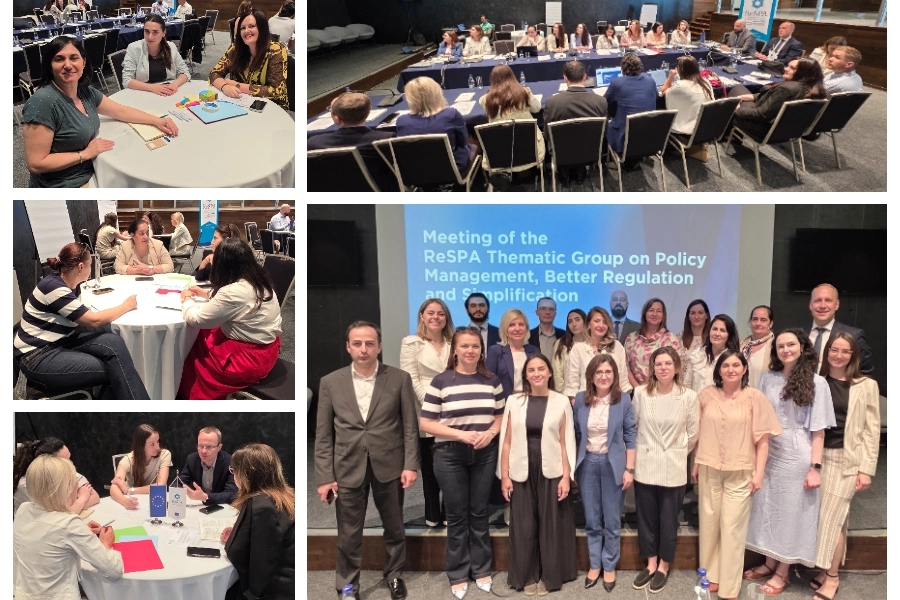
One of the most interactive parts of the programme, the World Café discussion, brought participants together to map shared challenges, priorities and opportunities. Working in groups, they explored key topics including Centres of Government and policy coordination, policy planning, monitoring and evaluation, Regulatory Impact Assessment and policy-budget alignment.
The format encouraged participants to move beyond presentations and engage in practical problem-solving. Together, they identified common priorities, exchanged innovative ideas and proposed concrete follow-up actions. The outcomes will directly inform ReSPA’s future programming and help tailor upcoming activities to both regional and administration-specific needs.
By bringing administrations together and connecting them with SIGMA/OECD expertise, ReSPA continues to strengthen its role as a regional hub for cooperation, capacity development and the exchange of good practices. The Thematic Group meeting reinforced the value of evidence-based policymaking and regional collaboration in advancing public administration reform.
The event concluded with the presentation of the World Café results, followed by reflections, conclusions and evaluation. The insights generated over the two days will help shape ReSPA’s future work plans and activities in policy management, better regulation and simplification.
The meeting sent a clear message: stronger policy coordination, smarter regulation and simpler procedures remain essential for building efficient, citizen-centred and EU-ready public administrations across the region.