

ReSPA-Supported High-Level Berlin Process Meeting of Ministers of Public Administration in Montenegro and Unveiled Landmark Regional Mobility Scheme
20–21 April 2026, Budva, Montenegro
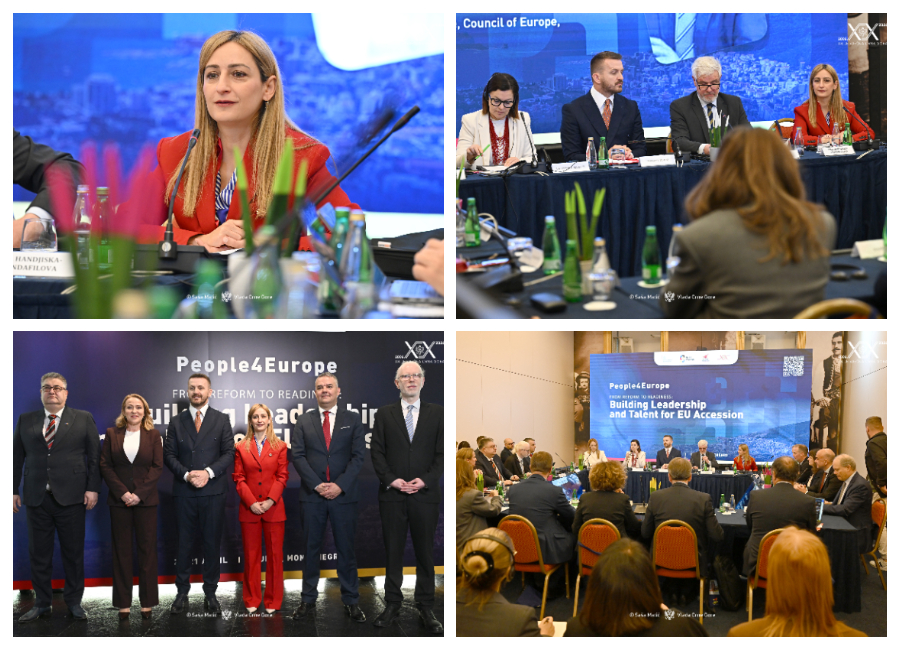
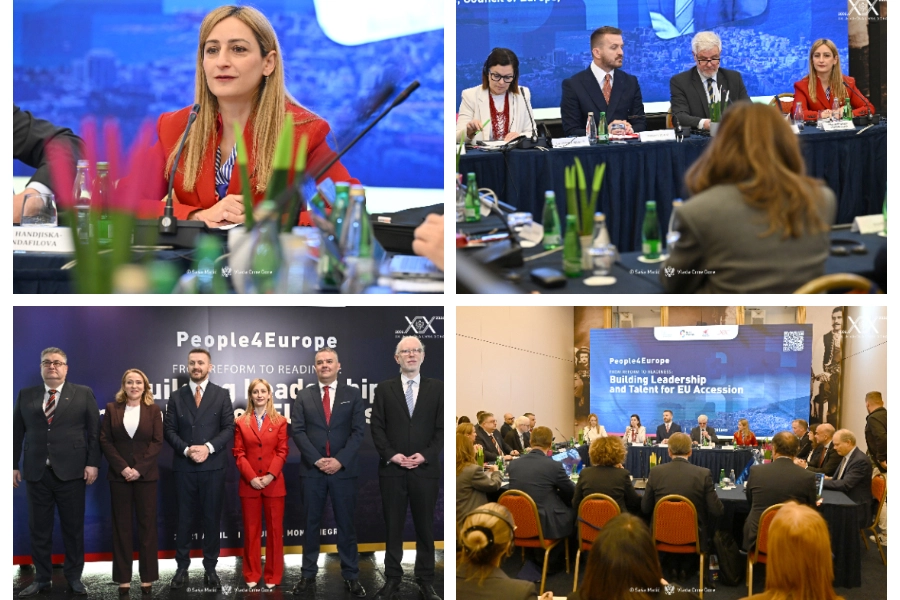
The Ministry of Public Administration of Montenegro hosted a high-level Ministerial Meeting under the Berlin Process in Budva, bringing together key regional leaders, EU officials, and international partners to advance public administration reform and accelerate EU accession-readiness across the Western Balkans.
Held under the theme “People4Europe: From Reform to Readiness - Building Leadership and Talent for EU Accession,” the meeting placed a strong focus on one of the most decisive elements of European integration: building capable, modern, and resilient public administrations that can deliver for citizens.
The event opened with remarks from Minister Marash Dukaj, Michael Reiffenstuel (Director for the Western Balkans, Türkiye, Council of Europe, and OSCE at the German Federal Foreign Office), and Director Maja Handjiska-Trendafilova, setting a clear and forward-looking political tone. Speakers underscored the urgency of reforms that directly impact governance quality, public service delivery, and citizens’ trust in institutions.
Director Handjiska-Trendafilova expressed appreciation to the Government of Montenegro and the Ministry for their strong partnership, as well as to the Government of Germany, the European Commission, and regional and EU partners for their continued support.
“Today’s agenda sends a clear message – EU accession is not only about aligning legislation, but above all about investing in people. Empowering leaders, attracting talent, and building a public administration that is ready for Europe – professional, digital, and agile – are not separate reform processes. They are deeply interconnected and determine whether reforms remain only on paper or truly translate into institutional readiness and tangible results. At ReSPA, we firmly believe that regional cooperation is the key to accelerating the development of public administration in the region and advancing more effectively towards European Union membership,” underlined Handjiska-Trendafilova.
In her keynote address, Ms Valentina Superti (Director for Western Balkans, Directorate-General for Enlargement and Eastern Neighbourhood, European Commission) reinforced the importance of strengthening administrative capacity as a cornerstone of the next phase of EU enlargement, placing reforms within a broader European context and calling for accelerated alignment with EU standards.
At the heart of the meeting were ministerial discussions on empowering leadership and attracting talent in challenging times, while ensuring that civil services across the region became more skilled and agile. Ministers from across the Western Balkans - including Ministers Adea Pirdeni, Davor Bunoza, Lulëzon Jagxhiu, Goran Minchev, and Snežana Paunović, shared their perspectives and reform priorities.
The debate was further enriched by contributions from EU Member States and international experts, including Mr Thomas Pappenscheller (Counsellor, Civil Service and Public Sector Innovation, Mr French Federal Ministry for Arts, Culture, the Civil Service and Sport), Mr Pavel Ivanov (Director of the Bulgarian Institute of Public Administration), Ms Fadila Bahović (State Secretary, Ministry of Justice, Public Administration and Digital Transformation of Croatia), Mr René Troccaz (French Special Envoy for the Western Balkans), Mr Ioannis Foustanakis (Secretary General for Public Administration, Ministry of the Interior of Greece), Mr. Francesco Leone (Diplomatic Adviser to the Italian Minister for Public Administration), and Mr Peter Pogačar (Director General of the Public Sector Directorate, Slovenian Ministry of Public Administration).
A major highlight of the event was the launch of the Regional Mobility Programme by ReSPA, presented by Jelena Mrdak, ReSPA Programme Manager. The initiative introduced a new dimension of regional cooperation, enabling civil servants to engage in structured exchanges, training, and on-the-job learning across administrations in the Western Balkans, the EU, Ukraine, Moldova, and Armenia. It was emphasised that the programme would provide participants with first-hand institutional experience, while fostering trust, openness, and a stronger sense of regional solidarity.
The programme was widely welcomed as a practical and forward-looking tool to strengthen knowledge exchange, support convergence with EU administrative practices, and build a more connected and future-ready civil service community across the region.
The meeting concluded with the presentation of the Chair’s Conclusions by Minister Dukaj, reaffirming the shared commitment to strengthening public administrations and advancing EU integration. Participants recognised the Regional Mobility Programme by ReSPA as an important step toward building more capable, collaborative, and resilient administrations that bring the region closer to a common European future.